Blog / Plymouth Lincoln Service

8 Signs Your Lincoln Needs a New Car Battery

At Oliver Lincoln, we pride ourselves on keeping your luxury vehicle running right. A healthy car battery is very important to the reliability and ride quality you experience, and fortunately, there are some pretty easy signs that you need a new car battery from your Lincoln dealership.

8 Signs You Need a New Car Battery from Your Lincoln Dealership

Delayed Engine Response

A telltale sign of a weakening battery in your Lincoln is a delay in engine response. When you turn the key or push the start button, the engine should roar to life. If it doesn't do that immediately, your battery may be losing its efficiency.

Electronic Features Malfunctioning

Lincoln vehicles are equipped with numerous advanced electronic features for your safety and convenience. If you begin to notice irregularities in these systems, such as the navigation system rebooting unexpectedly, seat settings resetting, or just slow action in the power windows, it could be due to a battery struggling to maintain power.

Battery Age and Performance

Typically, a battery lasts about 3 to 5 years, but this can vary. If your Lincoln's battery is nearing this age, though, have it tested and possibly replaced to avoid being caught off guard by a sudden failure.

Visual Inspection of the Battery

Look for signs of corrosion on the terminals, a bloated or misshapen battery case, or any leakage. These are all bad signs and mean your battery is in decline. Come to our service center right away, especially if the case is bloated or you notice any leaks.

Frequent Need for Battery Recharges

If you find yourself frequently needing to charge your battery or use a jump-starter, this is a clear indication that your battery's ability to hold a charge is diminishing. Constant recharging is not a sustainable solution, and one day you just won't be able to jumpstart it at all.

Dimming of Interior and Exterior Lights

Pay attention to the brightness of your Lincoln's interior and exterior lights. Dimming lights, especially when the vehicle is idle, can signal that the battery is not providing adequate power.

Strange Sounds on Starting the Car

If you notice odd clicking sounds when trying to start your Lincoln, this could mean the battery doesn't have enough charge to start the engine. These auditory cues are often overlooked, but they can indicate a problem.

Battery Warning Light

The battery warning light on the dashboard is an obvious indicator but one we're all tempted to ignore. If this light comes on, it's a straightforward message from your vehicle's diagnostic system that the battery needs attention.
Don't let battery woes take you out. If you're experiencing any of these signs, visit Oliver Lincoln to ensure your Lincoln continues to deliver the exceptional performance you expect.
Posted in:

Related Posts

TIRE SERVICES AT OLIVER LINCOLN DEALERSHIP IN PLYMOUTH, IN

Time for New Tires? Visit Your Lincoln Dealer

Whether you're cruising in a Continental or exploring in a Navigator, the importance of maintaining every aspect of your vehicle, especially your tires, cannot be overstated. Tires keep you connected to the road, but how do you know when it's time for new tires from your Lincoln dealer? more Tread Depth and the Penny Test The most straightforward way to check if your tires are due for a replacement is the penny test. Simply insert a penny into the tread groove upside-down. If you can see the top of Lincoln's head, it means your tread depth is less than 2/32 inches, and it's time to replace your tires. Tread Wear Indicator Bar Modern tires come with built-in tread wear indicators. These are small raised bars that sit within the grooves of your tire. Once these bars become flush with the tire's tread, it means the tread depth has reached the point of replacement. Cracks in the Sidewall Inspect the sidewalls of your tires. Visible cracks or cuts in the sidewall can be an indication that your tires are developing leaks or are close to failure. Sidewall damage can compromise the structural integrity of your tires, posing a safety risk. Bulges and Blisters Sometimes the outer surface of the tire develops weak spots, which can manifest as bulges or blisters. These weak spots can cause sudden tire blowouts and are definite signs that your tires need to be replaced immediately. Excessive Vibration While some vibration during driving is normal, especially on poorly paved roads, excessive vibration may indicate tire issues. This could be due to misalignment, imbalance, or internal tire damage, and it's a good idea to have them checked out at the dealership. Age of the Tires Even if your tires look okay, tire age is an important factor to consider. Most manufacturers recommend replacing your tires every six years, regardless of tread depth. Over time, the rubber in the tires degrades, which can lead to reduced performance and increased risk of tire failure. Frequent Loss of Tire Pressure If you find yourself needing to pump air into your tires frequently, it could be a sign of a slow leak. Consistently low tire pressure affects your car's fuel efficiency and handling. Visit Your Lincoln Dealer for New Tires When it's time for a new set of tires, your dealership is an excellent place to start. Our technicians have specialized knowledge of Lincoln vehicles. We can recommend the best tires for your model and driving habits, and then correctly install them. Recognizing when it's time for a fresh set of tires is crucial for maintaining the safety of your vehicle. If you're noticing any of these signs, don't hesitate to get help from the experts. Visit Oliver Lincoln to get your tires taken care of today!

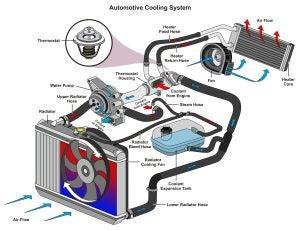
radiator system example

Does Your Lincoln Need a Radiator Repair?

Your engine needs to operate at its optimum temperature to work efficiently. The engine generates large amounts of heat as it works, and many engine components can become damaged due to excessive temperatures. Your radiator is responsible for removing the engine heat, and if it develops a problem, your Lincoln dealer can repair it. These are a few signs that you need a radiator repair. more Signs You Need a Radiator Repair at Your Lincoln Dealer Leaking Coolant Coolant is a vital liquid for your Lincoln's engine, as it removes the heat generated by the hundreds of moving parts in your engine. It does this by moving through your engine at high speed and absorbing the heat radiating out from the hot engine components. Once the heat is absorbed, the coolant is pumped into the radiator where the heat is removed by heat exchange. The cooling system operates under high pressure and at high speed, which means that even a small leak in the system can lead to a rapid coolant loss. As your engine loses coolant, the speed of the remaining coolant will drop, and your engine temperature will rapidly increase. We'll examine your cooling system to discover the source of the leak. Once it's found, we'll permanently seal the leak, Damaged Thermostat Coolant is only released into your engine when its internal temperature reaches a pre-set point. If coolant is released too early, your engine won't achieve its optimum operating temperature, and you'll use more fuel. When coolant is released, it will continue to flow until the engine temperature again drops below its pre-set point. The release of coolant is controlled by a small valve called the thermostat, which automatically opens in response to the increased temperature. This valve can become jammed due to age, and if this happens, the coolant won't be released, regardless of the engine temperature. With the constant flow of coolant, your engine will start to overheat. We'll test the thermostat, and replace it if it's failed. Air in the Cooling System The cooling system is air-tight, as air in the system can potentially cause a cooling system failure. If air enters the cooling system, it will form an air bubble that will block the flow of the liquid coolant through the engine. If coolant can't move rapidly through the system, the heat generated by the engine won't be removed, and your engine will start overheating. Unfortunately, air can enter your radiator through even a tiny hole anywhere in the system. If your engine starts to overheat for no apparent reason, you could have an air bubble. We'll examine your system, and if we find an air bubble, we'll bleed the system to remove it. A radiator problem can cause permanent damage to your engine if it's not repaired ASAP. Call us today at Oliver Lincoln.

3 Essential Services You'll Find at Your Plymouth Lincoln Dealership

Your Lincoln requires regular service and maintenance to keep it operating at its best. As your Lincoln dealership in Plymouth, IN, we have a full range of services to keep your Lincoln in great shape. These are some of the services we can provide for your Lincoln. more Battery Testing On average, a car battery will last for three to five years. As a battery wears down, it will develop problems with retaining a charge, and its charging ability will also drop. These two issues will cause problems for your car and could even leave you stranded at the side of a deserted road with a dead battery. Battery testing is a great way to get a heads-up on your battery's condition. We'll connect your battery to our battery testing machine. This machine will subject your battery to a variety of tests to determine its strengths and weaknesses. Once testing is complete, the results will give a good indication of your battery's health and the possible need for replacement. If you need a replacement, we have the correct size available for your car and can easily install it for you. Tire Rotation Your tires are subject to constant abrasion and possible damage. Eventually, your tires will wear out and need replacement. Tire rotation helps delay the need for rotation by keeping your tires in good condition for longer. Your tires wear out differently depending on their position on your car and several other factors. The front tires on an FWD, for example, will wear out faster as they carry more weight. When we rotate your tires, we move them from positions with the most wear to positions of reduced wear. This process helps to even out when across all of your tires. If your tires wear down evenly, you can delay the need for new tires. Tires are expensive, and this process allows you time to prepare for their replacement. Brake Pad Replacement Brake pads are essential for your car, as they generate the friction that is required to bring your car to a stop. These pads have a thick friction material covering that reacts with the smooth surface of the wheel rotor to stop your car. Generating this friction comes at a cost, as the covering slowly wears off. When a pad has worn down to 1/4" thick, it's time to replace it. If your pads aren't replaced when they start to wear out, they will eventually cause damage to the wheel rotors. Fortunately, you receive plenty of warning that there's a problem as your pads will screech or make grinding noises until they're replaced. These are just a few of the many services we have available. Come in and see us at Oliver Lincoln.